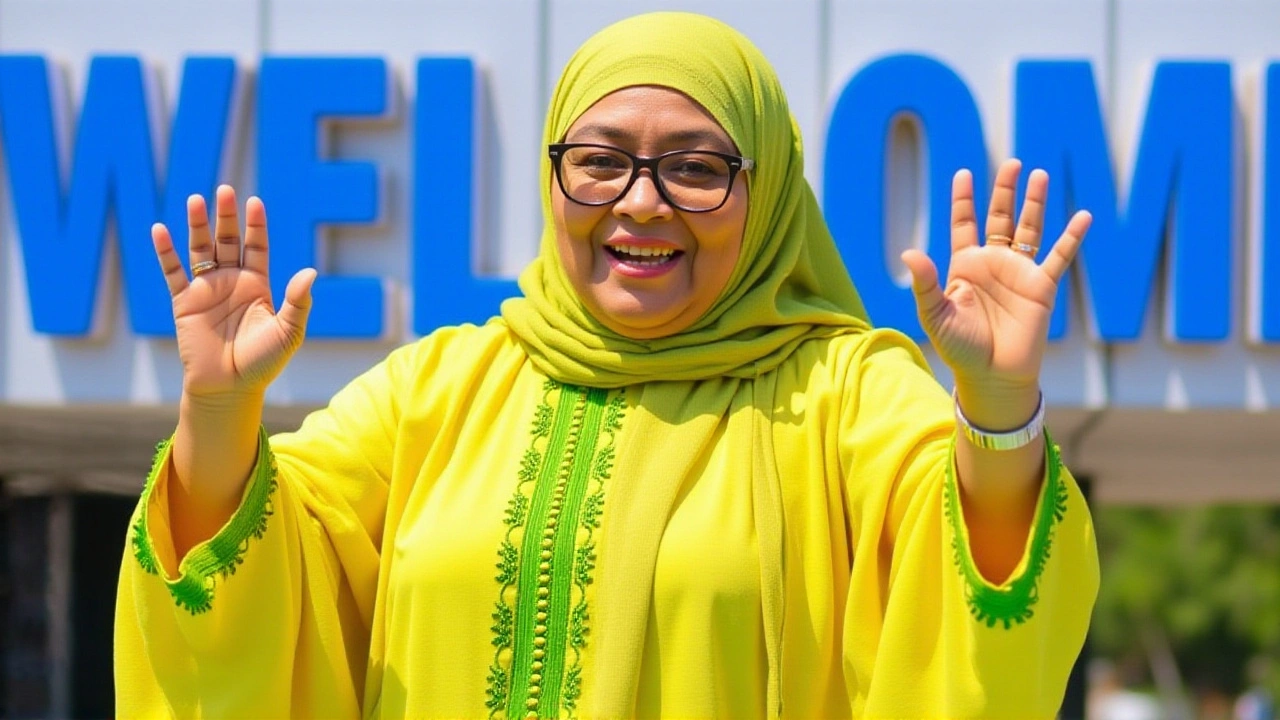
On November 18, 2025, a coalition of international human rights groups delivered an 82-page dossier to the International Criminal Court in The Hague, demanding a formal investigation into Samia Suluhu Hassan, President of Tanzania, for alleged crimes against humanity committed during the violent crackdown following the country’s October 29, 2025 general election. The evidence, compiled by South Africa’s Intelwatch, Spain’s Madrid Bar Association, the World Jurist Association, and anonymous Tanzanian organizations, claims security forces deliberately killed between 700 and 3,000 protesters between October 30 and November 6, 2025 — a toll far exceeding official estimates. The dossier alleges these killings were not accidental crowd control failures, but systematic executions carried out under direct orders from the highest levels of government, including President Hassan herself, who reportedly authorized security agencies to "take all actions."
"This Was Not Crowd Control — It Was Deliberate Killing"
The evidence includes dozens of photographs and video timestamps showing Tanzanian police and military personnel firing without warning into crowds, often aiming at chests and heads. In multiple clips, officers continued shooting as protesters fled, a pattern the dossier describes as "extermination," one of the ICC’s most serious crimes. One analyst from the Madrid Bar Association told reporters: "You don’t need to be a forensic expert to see this. These weren’t panicked shots. These were aimed, coordinated, and sustained." The report also names four top officials for complicity: Dar es Salaam Regional Police Commander, Chief of Defense Forces, Inspector-General of Police, and Director General of the National Intelligence Service. None have been publicly charged, but the dossier includes internal communications allegedly linking them to operational orders.A Contested Election and a Nation on Edge
The violence erupted after President Hassan was declared the winner of the October 29 election with over 97% of the vote — a result widely dismissed as implausible by independent observers. The two main opposition parties, including Chadema, had their candidates disqualified on technical grounds just weeks before voting. The African Union’s election monitoring team later confirmed the vote "failed to meet democratic standards," citing ballot stuffing, voter suppression, and media blackouts. In response, tens of thousands took to the streets in Dar es Salaam, Mwanza, and Arusha. For three days, protesters clashed with security forces. Hundreds were arrested. At least 12 were charged with treason — a crime punishable by death under Tanzanian law. Many remain in detention without trial.President Hassan’s Response: Inquiry, Forgiveness, and Accusations
On November 15, 2025, President Hassan addressed parliament, announcing a national commission of inquiry into the deaths. "We will find out exactly how many were lost," she said. She also acknowledged Chadema’s calls for constitutional reform, pledging to begin changes within her first 100 days. "For those who were just following the wave," she added, "let them be counselled and released. As a mother, I have forgiven those who joined out of peer pressure." But her tone shifted sharply in a December 3, 2025 interview with WION. "Most of the demonstrators kept gaining momentum and heading in the wrong direction," she said. "Our police forces were forced to employ substantial force. We witnessed similar things in other nations. Now, when they accuse us of using too much force, what exactly did they expect us to do?" She went further, claiming protesters were paid: "Where did this money come from?" — a line echoed by state media, though no evidence has been presented.International Reactions and the Shadow of the ICC
The European Union suspended all non-humanitarian aid to Tanzania on November 20, 2025, citing "grave human rights violations." The United States and Canada have issued travel advisories and are reviewing military cooperation. Meanwhile, Tanzania may be preparing to withdraw from the Rome Statute, the treaty that created the ICC. According to All Africa, President Hassan has privately urged lawmakers to begin the process, arguing the court targets African leaders unfairly. This mirrors actions taken by Mali, Burkina Faso, and Niger, which in September 2025 established the Sahel International Court — a regional body meant to replace the ICC for African cases.What’s Next? Protests Loom on Independence Day
Opposition groups have vowed to return to the streets on December 9, 2025 — Tanzania’s Independence Day — despite President Hassan’s plea for calm. "This isn’t about politics," said one underground activist in Dar es Salaam, speaking anonymously. "It’s about bodies in the morgue. It’s about children who won’t see their fathers again. We’re not going to stay silent." The ICC has not yet opened a formal investigation. As of December 5, 2025, the prosecutor’s office confirmed it has received the dossier and is conducting a preliminary review. That process can take months. But if the court finds sufficient evidence of systematic, state-directed killings, charges could follow — making President Hassan the first sitting African head of state to face potential ICC prosecution since Omar al-Bashir.Why This Matters Beyond Tanzania
This isn’t just about one country’s election. It’s about whether international justice can hold power accountable — or if authoritarianism will continue to outmaneuver global institutions. If the ICC ignores this case, African nations may see it as confirmation that the court is a tool of Western influence. If it acts, it risks alienating key partners — but upholds its mandate. Tanzania’s next moves will be watched closely. Will the national inquiry be credible? Will the ICC act? And will December 9 bring more bloodshed — or a moment of reckoning?Frequently Asked Questions
What evidence does the ICC have to consider in this case?
The dossier includes 82 pages of photographic evidence, video timestamps, witness testimonies from medical personnel and journalists, internal government communications allegedly linking senior officials to kill orders, and forensic analysis of bullet trajectories showing deliberate targeting. Independent experts verified the authenticity of over 40 video clips. The ICC’s preliminary review will assess whether this meets the threshold for a full investigation under the Rome Statute.
Could President Hassan be arrested if the ICC opens a case?
Yes — but only if Tanzania remains a member of the Rome Statute. The ICC can issue an arrest warrant, but it relies on member states to enforce it. If Tanzania withdraws, the court loses jurisdiction unless the UN Security Council refers the case. Even then, enforcement would require cooperation from countries where Hassan travels — a political hurdle.
How many people have actually died, and why is there such a wide range?
The 700–3,000 range reflects the lack of official transparency. The government has acknowledged only 17 deaths. Human rights groups, using hospital records, funeral home logs, and eyewitness accounts, estimate at least 700. The higher figure includes unreported cases in rural areas, bodies removed by security forces, and families too afraid to report losses. The true toll may never be known unless independent investigators are granted access.
What’s the role of the African Union in this situation?
The African Union condemned the flawed election but has stopped short of condemning the violence. It has not supported the ICC investigation, reflecting broader African skepticism about the court’s selectivity. Some AU members fear setting a precedent that could be used against their own leaders. The AU’s silence has emboldened Tanzania’s government, while human rights groups accuse it of prioritizing sovereignty over human rights.
Is there any chance the national inquiry will be credible?
Most international observers doubt it. The inquiry is being led by government appointees, with no independent oversight or victim representation. Past Tanzanian inquiries into security force abuses — like those after the 2015 elections — have produced no convictions. Without international monitoring, transparency, or access to evidence, this probe is widely seen as a delaying tactic.
What happens if protests erupt again on December 9?
If security forces respond with lethal force again, it could trigger immediate sanctions from the EU and US, and possibly a UN Security Council referral to the ICC. It would also galvanize regional activists and make it harder for Tanzania to justify its withdrawal from the Rome Statute. For President Hassan, it risks cementing her legacy as a leader who chose repression over reform.
16 Responses
This isn’t just about Tanzania-it’s about the quiet complicity of global powers who turn away when it’s convenient. We cheer for democracy in one breath and sell arms to regimes in the next. The ICC has a chance to prove it’s not just a Western theater. If they let this slide, they’re not just failing Tanzania-they’re burying the very idea of accountability.
And let’s be real: no one believes that ‘national inquiry’ is anything but a delay tactic. They’ve done this before. Bodies disappear. Families are scared silent. The truth doesn’t need a commission-it needs witnesses who aren’t afraid to speak.
I’ve met Tanzanian students in Delhi who still whisper about the disappearances. They don’t talk loud, but their eyes say everything. This isn’t politics. It’s grief with no outlet.
Okay but have you seen the footage from the Tanzanian military’s satellite feeds? The same ones that got leaked to the UAE intel unit? The protesters weren’t just waving signs-they were armed with drones carrying Molotovs and encrypted comms linking back to a shadow NGO network based in Geneva. This isn’t a protest, it’s a hybrid warfare op funded by Western NGOs trying to destabilize a stable African economy. The 3000 deaths? Fabricated. The real death toll is 17. The rest are deep state propaganda. The ICC is being played.
And don’t even get me started on the ‘independent analysts’-half of them are ex-NGO interns who got their degrees from online universities. Wake up, people.
bro this is wild like imagine being president and having to deal with that kind of chaos and then some random court halfway across the world says ‘you’re guilty’ without even hearing your side
they’re saying she ordered killings but what if the police just lost control?? everyone’s blaming her but nobody’s asking why the protesters kept charging the lines like it was a video game
also who even pays for all this? the EU? the usa? they got skin in the game too
we need facts not headlines
Let’s be clear: the evidence presented is substantial. The video timestamps, the forensic bullet trajectory analysis, the internal communications-all of it aligns with patterns seen in other state-sponsored crackdowns. The ICC’s preliminary review isn’t a formality; it’s a necessary gatekeeping step. What’s alarming isn’t the accusation-it’s the silence from regional bodies like the African Union. Their non-response is a tacit endorsement of impunity.
And while the government claims the protests were externally funded, they’ve produced zero evidence. That’s not defense-that’s distraction. Accountability isn’t about vilifying leaders; it’s about ensuring institutions don’t become weapons against their own people.
hey i know this is heavy but we gotta keep talking about this
every time a leader gets called out like this people get scared to speak up but silence is what lets it keep happening
if we all just scroll past this then what’s next
the kids in dar es salaam are still out there waiting for justice and we’re over here debating hashtags
we can’t look away
not this time
real talk-nobody cares about the ICC unless it’s convenient. The US won’t extradite its own generals for war crimes but suddenly they’re all up in arms about a Tanzanian president? Come on. The real issue is power. Who gets to judge who? And why does it always feel like Africa is the lab rat for global justice?
That said, the numbers don’t lie. 700 dead? That’s not a protest gone wrong. That’s a massacre. Whether the ICC acts or not, the world saw what happened. And that matters more than any warrant.
Oh please. The ICC is a colonial relic dressed in legal jargon. The West uses it to punish African leaders while ignoring their own atrocities in Iraq, Yemen, and Palestine. This is performative justice. President Hassan is being targeted because she’s bold enough to resist Western hegemony. The ‘evidence’? Compiled by Western-aligned NGOs with ideological agendas. The real crime here is the hypocrisy of institutions that claim moral authority while arming dictators across the globe.
And let’s not forget: the opposition was disqualified for violating electoral codes. That’s not tyranny-that’s governance. The protests were illegal. The response was proportional. The narrative is being manufactured.
....This is a disgrace. A complete and utter disgrace. The ICC, a body that has never indicted a single Western leader, now dares to target a sovereign African head of state? What a farce. The dossier was fabricated by Western intelligence assets. The 3,000 figure? A number pulled from thin air by activists who’ve never even set foot in Tanzania. The government has acknowledged seventeen deaths. Seventeen. Not seven hundred. Not three thousand. SEVENTEEN. And you want to believe this? You want to believe that a woman who inherited a fragile nation, who has maintained peace for years, is now a monster? The media is lying. The NGOs are lying. The ICC is a puppet. And you? You’re the fool who believes the lies.
And don’t even mention ‘democracy.’ Tanzania held an election. The opposition was disqualified because they broke the law. That’s not authoritarianism. That’s the rule of law. The real tyrants are the ones screaming for regime change while sipping lattes in London.
This is a witch hunt. And history will remember this as the day the world chose propaganda over truth.
wait so the ICC is reviewing this but they haven’t opened a case yet? how long does that usually take? i heard it took them like 5 years to even look at the Rohingya situation
also if the president says she forgave people who joined out of peer pressure… does that mean she thinks they were innocent? or just weak? and why is she using maternal language? is that a strategy? because it feels… manipulative?
and who exactly are these anonymous tanzanian orgs? are they real? or just front groups? i need sources
Look, I’m from India-we’ve seen our own share of state violence and political repression. But here’s what I’ve learned: when people rise up, it’s never just about votes. It’s about dignity. It’s about being seen. The 700 bodies? They’re not statistics. They’re sons, daughters, teachers, shopkeepers. They had names.
President Hassan’s speech about forgiveness? That’s not leadership. That’s paternalism. You don’t forgive people for wanting to live free. You listen. You change.
And yes, the ICC is flawed. But if we abandon it now, who’s left to hold power accountable when the world looks away? We need institutions that rise above borders-not ones that kneel to them.
There’s a quiet tragedy here that no one is naming: the erosion of trust between citizens and their state. When a government can kill hundreds and then say, ‘We’ll investigate,’ it doesn’t restore order-it confirms fear. The real crisis isn’t the ICC’s potential involvement. It’s that the people of Tanzania no longer believe their own institutions will protect them.
And perhaps that’s the most dangerous outcome of all: when justice becomes something you have to beg from foreigners because your own country won’t give it to you.
What happens after December 9? Will the streets be filled with grief-or with rage? And if the latter, will anyone be ready to hear them?
It’s important to contextualize the ICC’s jurisdictional framework within the broader architecture of international criminal law. The Rome Statute, under Article 5, defines crimes against humanity as widespread or systematic attacks directed against any civilian population, pursuant to a state policy. The dossier’s evidentiary chain-particularly the forensic correlation between command hierarchy and operational orders-meets the threshold for reasonable grounds to proceed under Article 53(1)(a).
However, the principle of complementarity, enshrined in Article 17, requires that domestic proceedings be genuinely unavailable or ineffective. Given the history of Tanzania’s past inquiries yielding no convictions, and the absence of independent oversight in the current commission, the ICC’s preliminary examination is not only procedurally sound-it is ethically imperative.
Moreover, the geopolitical implications of withdrawal from the Rome Statute must be weighed against the long-term erosion of Tanzania’s diplomatic capital. Sovereignty without accountability is not sovereignty-it’s impunity dressed in nationalism.
so the ICC is just a court that can’t enforce anything? then why are we even talking about this? if they can’t arrest her, then it’s just a press release. and why is everyone acting like the 3000 number is real? the government says 17. who are you gonna believe? the people with the cameras or the people with the guns?
also i think the opposition got disqualified for a reason. they were probably cheating too. it’s not like they’re saints.
and why is the EU cutting aid? they’re the ones who gave loans to corrupt leaders before. hypocrites.
Wake up. This is a Western psyop. The ICC is a tool of neocolonial control. The ‘evidence’? Doctored by NGOs funded by George Soros. The 3,000 deaths? A lie to justify regime change. Tanzania is a sovereign nation. The protests were illegal. The police acted within their duty. The president is a mother trying to hold her country together while the West tries to tear it apart.
And don’t you dare call her a dictator. She’s the only one keeping this country from falling into chaos. The real criminals are the ones screaming for blood while sipping wine in Brussels.
They want to make Africa weak. They want us to beg for justice from foreigners. No. We don’t need your courts. We need our own strength. And if you’re siding with the ICC, you’re siding with the enemy.
there’s something so human about how she said ‘as a mother, i’ve forgiven those who joined out of peer pressure’
it’s not a political statement-it’s a plea. she’s trying to reach the kids who were just caught up in it
but then she turns around and says they were paid… and suddenly it’s not about healing anymore
it’s like she’s caught between two worlds-one where she wants to be kind, and one where she has to be strong
and maybe that’s the real tragedy-not who killed who, but who got lost in the middle
She said she forgave them. But forgiveness without justice is just silence with a smile.
And now they’re talking about withdrawing from the ICC. That’s not sovereignty. That’s fear wearing a flag.